How to Choose the Right Basement Waterproofing Method for Your NJ Home: Interior vs. Exterior Solutions

Attic Insulation Cost NJ 2026: Spray Foam, Batt, and Blown-In Pricing for Monmouth County Homes
May 4, 2026
How to Fix a Window Screen Yourself vs. Hiring a Handyman in NJ
May 18, 2026
Key Takeaways
- Interior waterproofing costs $3,000–$7,000 on average and manages water that has already entered your basement.
- Exterior waterproofing costs $5,000–$20,000+ but stops water before it reaches your foundation walls.
- Most NJ homes built before 1980 benefit from a hybrid approach that combines interior drainage with exterior grading.
- A sump pump installation adds $600–$2,500, but is often required for interior systems to work properly.
- Permits for excavation and drainage in Monmouth County typically add $75–$500 to your total project cost.
- Waterproofing pays for itself by preventing mold growth, structural damage, and denied insurance claims.
Choosing between basement waterproofing methods in NJ starts with one question: interior or exterior? Interior costs less upfront. Exterior blocks water at the source. The right choice depends on your foundation, soil grade, and how water enters. Here is how to decide.
Quick Verdict: Which Method Wins?
Interior waterproofing wins for budget-conscious homeowners with minor seepage. It installs faster and requires no excavation.
Exterior waterproofing wins for homes with chronic flooding or foundation cracks. It is the only method that prevents water from touching your walls.
Most West Long Branch homes we see need a mix of both. Coastal NJ soil holds moisture, and older foundations often have multiple failure points. A single method rarely solves the whole problem.
Interior vs. Exterior: A Side-by-Side Comparison
| Factor | Interior Waterproofing | Exterior Waterproofing |
|---|---|---|
| Average cost | $3,000–$7,000 | $5,000–$20,000+ |
| Cost per sq. ft. | $3–$10 | $3–$10 (plus excavation) |
| Best for | Managing water that has entered | Blocking water before it enters |
| Installation time | 1–2 days | 2–5 days (includes excavation) |
| Disruption level | Low | High (landscaping must be dug up) |
| Common methods | Sealants, epoxy injection, interior French drains, sump pumps | Exterior French drains, membrane barriers, soil grading |
| Permit required | Rarely | Often (for excavation and drainage) |
| Longevity | 5–10 years (reactive) | 10+ years (preventative) |
This table gives you the headline differences. The sections below explain when each approach makes sense for your specific situation.
Is Interior Waterproofing Right for Your Basement?
Interior waterproofing refers to any system installed inside your basement to manage or redirect water that has already entered. A vapor barrier costs $1,500–$4,000 and blocks moisture from seeping through walls. Epoxy injection runs $250–$1,000 per crack and seals active leaks in poured concrete.
Choose interior methods if your basement shows minor dampness or efflorescence. Efflorescence is the white, powdery residue left behind when water soaks through concrete and evaporates. It signals moisture issues but not necessarily structural failure.
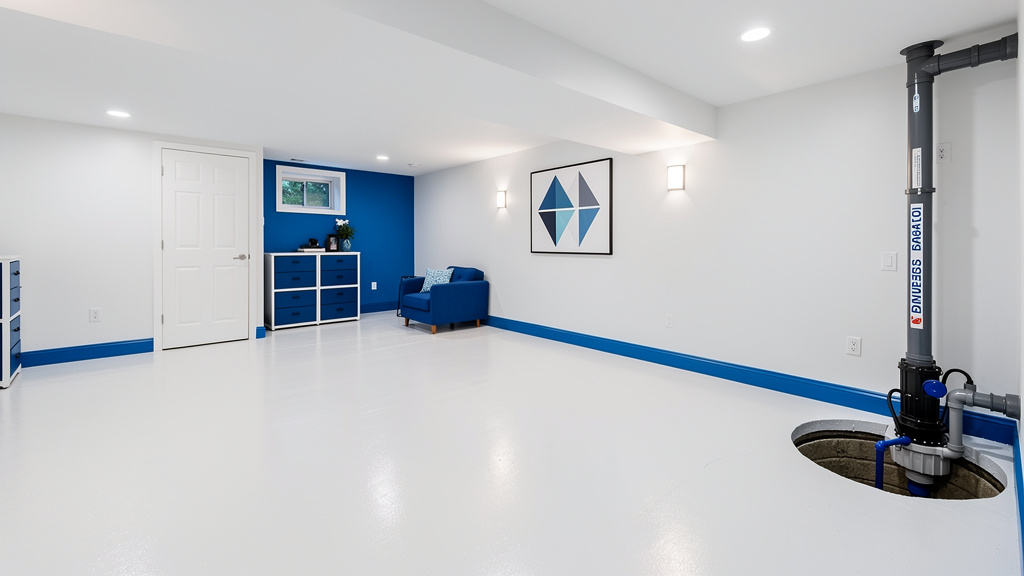
Interior systems also work best when exterior access is limited. Tight lot lines, attached decks, or finished landscaping make excavation impractical. In these cases, an interior perimeter drain and sump pump can keep your basement dry without tearing up your yard.
A sump pump collects water from an interior drain system. It then pumps that water out of your home. Sump pump installation costs $600–$2,500. Battery backup systems add $200–$500 more. That backup matters during NJ coastal storms when power outages are common.
Interior waterproofing is reactive, not preventative. It manages water, but does not stop it from reaching your foundation. Think of it as a drainage plan, not a shield.
Should You Invest in Exterior Waterproofing?
Exterior waterproofing stops water before it touches your foundation. It is the only approach that addresses the root cause of basement moisture.
A French drain is a perforated pipe buried in gravel around your foundation. Contractors also call it a footing drain or weeping tile. It collects groundwater and redirects it away from your walls. French drains cost $10–$100 per linear foot depending on depth and soil conditions.
Exterior methods become necessary when you notice standing water after heavy rain. They also make sense if your foundation has horizontal cracks or bowing walls. These are signs of hydrostatic pressure, which builds when saturated soil pushes against your basement walls.
Soil grading is another exterior fix. It costs $500–$3,000 and simply slopes the earth away from your home. The U.S. Department of Energy recommends a minimum 5% grade sloped away from the foundation for at least 5 feet. That is 3 inches of drop over 5 feet. Many older NJ homes were built with flat or even negative grade, which directs water toward the basement.
Exterior waterproofing requires excavation. Crews must dig down to the footing, apply a waterproof membrane, and install drainage. Labor makes up a large portion of the cost. Most pros charge around $200 per hour for this work.
Exterior systems last 10+ years. They protect your foundation from freeze-thaw cycles, salt air, and heavy clay soils. These conditions are common in Monmouth County and surrounding coastal towns.
Cost Breakdown by Method
| Method | Interior / Exterior | Typical Cost |
|---|---|---|
| Waterproof paint / sealants | Interior | $1–$8 per sq. ft. |
| Epoxy injection | Interior | $250–$1,000 per crack |
| Interior perimeter drain | Interior | $40–$120 per linear ft. |
| Sump pump | Interior | $600–$2,500 |
| Vapor barrier | Interior | $1,500–$4,000 |
| Dehumidifier | Interior | $1,000–$2,800 |
| French drain | Exterior | $10–$100 per linear ft. |
| Soil grading | Exterior | $500–$3,000 |
| Exterior membrane | Exterior | $3–$6 per sq. ft. |
Your total depends on basement size, foundation condition, and how many methods you combine. A 1,000-square-foot basement with an interior drain and sump pump typically falls in the $5,000–$7,000 range. The same basement with exterior excavation and a French drain can reach $15,000–$20,000.
Permits add $75–$500 depending on the scope. Monmouth County requires permits for any excavation that changes drainage patterns or affects structural elements. Your contractor should pull these permits before work begins.
Insurance will not cover waterproofing. Insurers classify it as preventative maintenance. That means you pay out of pocket. But the cost of doing nothing is often higher. Mold remediation starts at $500–$1,500 and can climb to $6,000 if the problem spreads. Structural repairs range from $2,500–$25,000.
FEMA manages the National Flood Insurance Program through more than 50 insurance companies. Standard homeowners’ policies exclude flood damage. Only about 22% of homeowners believe they face flood risk, and even fewer carry coverage. Waterproofing is your first line of defense.
What Do Most Basement Waterproofing Guides Get Wrong About NJ?
Most cost guides ignore climate. NJ gets 43–51 inches of rain per year. Coastal towns like West Long Branch also deal with salt air, high water tables, and storm surge. These factors push water against foundations harder and more frequently than in drier states.
Older homes are another variable. Many Monmouth County houses were built before modern drainage codes. They lack footing drains, vapor barriers, or proper grading. A standard interior system might keep the floor dry but miss the moisture wicking through block walls.
The U.S. Environmental Protection Agency notes that controlling moisture is the only way to control indoor mold growth. There is no practical way to eliminate all mold spores. If your waterproofing plan only addresses liquid water and ignores humidity, you still risk air quality problems.
Air movement accounts for more than 98% of all water vapor movement in building cavities. That is why sealing cracks and adding a vapor barrier matters just as much as installing a drain. A complete plan addresses both liquid water and airborne moisture.
We have handled basement repairs across West Long Branch and surrounding towns for over 25 years. The homes that stay dry long-term almost always combine interior drainage with exterior grading and gutter management. One method alone usually fails within a few years.
Your Next Steps
Start with a visual inspection. Look for efflorescence, musty odors, or damp spots after rain. Check your gutters and downspouts. Make sure they direct water at least 5 feet from your foundation.
If you see cracks wider than a quarter inch, or if water pools on the floor, call a pro. A proper assessment identifies whether the water is coming from surface runoff, groundwater pressure, or plumbing leaks. Each source needs a different fix.
Regular home maintenance keeps small problems from becoming expensive ones. Annual gutter cleaning and foundation checks cost far less than emergency waterproofing. If you have active leaks, our plumbing team can rule out pipe issues first. That saves you from investing in the wrong fix.
Sometimes the problem is not drainage at all. A stuck exterior door or damaged frame can let water seep in during heavy rain. Our door installation and repair crew can check your thresholds and weatherstripping. You can also learn about fixing drafty doors without replacing them — small air sealing steps that also keep moisture from migrating inside. Small fixes like these often prevent bigger basement issues.
For chronic moisture or foundation damage, you may need a broader home repair plan. We can assess your basement, foundation, and drainage as one system. That is how you get a fix that lasts.
If water is flooding your basement right now, you need help fast. Our 24/7 emergency handyman team responds around the clock. We stop active leaks and prevent further damage before mold sets in.
Not sure where to start? A quick call gets you a free estimate and a straight answer. No commitment needed.
Talk to a Waterproofing Expert in Monmouth County
Stop guessing what your basement needs. Call (732) 400-4667 for a free assessment — we serve West Long Branch and surrounding Monmouth County communities.
Frequently Asked Questions
1. How much does basement waterproofing cost in NJ?
Most homeowners pay $3,000–$10,000, depending on the method and basement size. Interior systems fall on the lower end. Exterior excavation with French drains pushes costs toward $15,000–$20,000. Coastal NJ soil and high water tables often require more extensive work than national averages suggest.
2. Does interior waterproofing fix the problem permanently?
No. Interior waterproofing is reactive. It manages water that has already entered your basement. It lasts 5–10 years on average. Exterior waterproofing is preventative and lasts 10+ years because it stops water at the source.
3. Will my homeowners’ insurance cover basement waterproofing?
No. Insurance classifies waterproofing as preventative maintenance. Most policies will not cover damage from preventable basement leaks either. You pay out of pocket for waterproofing, but it protects against far costlier mold and structural repairs.
4. Do I need a permit for basement waterproofing in Monmouth County?
Permits are usually required for exterior excavation, French drain installation, or any work that changes drainage patterns. They cost $75–$500. Interior sealants and minor crack repairs typically do not need permits. Always confirm with your local building office before work begins.