Attic Insulation Cost NJ 2026: Spray Foam, Batt, and Blown-In Pricing for Monmouth County Homes

DIY Electrical Repairs vs. Hiring a Licensed Electrician in NJ: What’s Safe and Legal in 2026
April 27, 2026
How to Choose the Right Basement Waterproofing Method for Your NJ Home: Interior vs. Exterior Solutions
May 11, 2026
Key Takeaways
- Attic insulation costs in New Jersey range from $1.50 to $7.00 per square foot, depending on material type.
- A typical 1,000-square-foot Monmouth County attic costs $1,500 to $7,000 to insulate in 2026.
- The U.S. Department of Energy recommends R-60 for attics in New Jersey’s Climate Zone 4.
- Blown-in insulation is the most budget-friendly option at $1.50 to $3.50 per square foot installed.
- Spray foam costs $3.50 to $7.00 per square foot but delivers the highest R-value per inch.
- NJ homeowners can cut heating and cooling bills by up to 20% with proper attic insulation.
Most Monmouth County homeowners spend $2,000 to $5,000 on a full attic insulation job. Your exact price depends on material choice, attic size, and current insulation condition.
What Is the Average Attic Insulation Cost in NJ?
The average attic insulation cost NJ homeowners pay in 2026 falls between $1.50 and $5.00 per square foot. Most projects total $2,000 to $5,500 for a standard 1,000-square-foot attic. Prices vary by insulation type, labor rates, and prep work needed.
New Jersey labor costs run higher than the national average. Monmouth County contractors typically charge $50 to $90 per hour for insulation work. Material shortages in early 2026 have pushed fiberglass prices up 8% to 12% year over year.
Cost by Insulation Type
| Insulation Type | Cost Per Sq Ft | Total Cost (1,000 Sq Ft) | R-Value Per Inch | Best For |
|---|---|---|---|---|
| Blown-in fiberglass | $1.50 – $2.50 | $1,500 – $2,500 | R-2.2 to R-2.7 | Attic floors, retrofits |
| Blown-in cellulose | $1.80 – $3.50 | $1,800 – $3,500 | R-3.2 to R-3.8 | Filling gaps, sound dampening |
| Fiberglass batt | $1.00 – $3.00* | $1,000 – $3,000 | R-3.0 to R-4.0 | Open joist bays, DIY projects |
| Open-cell spray foam | $3.50 – $5.00 | $3,500 – $5,000 | R-3.5 to R-3.7 | Irregular spaces, air sealing |
| Closed-cell spray foam | $5.00 – $7.00 | $5,000 – $7,000 | R-6.0 to R-7.0 | Maximum R-value, moisture control |
*Batt costs reflect material-only pricing; installed costs run $2.00 to $4.00 per square foot.
Blown-in insulation covers the largest volume of NJ attic jobs. It fills irregular joist bays and covers existing insulation well. Spray foam makes up roughly 15% of residential attic jobs but commands premium pricing due to labor and equipment needs.
What Drives Attic Insulation Prices Up or Down?
Several factors move your final invoice higher or lower. Understanding these helps you budget and avoid surprises.
Attic Size and Accessibility
Larger attics need more material and labor. Steep roofs, narrow hatches, or limited headroom slow crews down. Contractors may add $200 to $500 for difficult access.
Current Insulation Condition
Homes with less than R-30 need full insulation. The U.S. Department of Energy states that adding insulation to an existing home can pay for itself within a few years. If your attic has old, compressed fiberglass, crews must remove it first. Removal adds $1.00 to $2.00 per square foot.
Air Sealing Requirements
Air leaks waste up to 30% of heating and cooling energy. Most pros seal gaps around light fixtures, chimneys, and top plates before adding insulation. Air sealing adds $150 to $600 but improves performance.
Ventilation and Baffles
Attics need proper ventilation to prevent moisture buildup. Installing baffles and vents costs $300 to $800. This step protects your investment and keeps warranties valid.
NJ Climate Zone Requirements
New Jersey sits in DOE Climate Zone 4. The Department of Energy recommends R-60 for uninsulated attics in Zone 4. That equals roughly 18 to 24 inches of loose-fill fiberglass or 10 to 15 inches of cellulose. Meeting code may require more material than a basic top-up.
How to Get the Best Value on Attic Insulation?
You don’t need the most expensive option to stay comfortable. You need the right option for your home and budget.
Match Material to Your Goal
Choose blown-in fiberglass or cellulose for the best cost-per-R-value. Pick spray foam if your attic doubles as storage or if you need moisture control near the coast. Batt insulation works for unfinished attics with clear joist bays.
Layer New Insulation Over Old
If your existing insulation is dry and uncompressed, add blown-in on top. This saves removal costs and landfill fees. The Department of Energy notes that increased insulation thickness proportionally increases R-value.
Seal Before You Insulate
Air sealing delivers the biggest comfort gain per dollar. Caulk gaps around plumbing stacks and electrical boxes per the Department of Energy. Weatherstrip the attic hatch. These small fixes cost under $50 in materials.
Time Your Project Right
Insulation contractors are busiest in the fall and early winter. Book in spring or summer for better availability. Some contractors offer 5% to 10% discounts during slow months.
Check for NJ Rebates
NJ home insulation rebates are available through the NJ Clean Energy Program’s Home Performance with Energy Star program. Eligible homeowners can receive up to $5,000 back on energy-efficient improvements. A home energy audit identifies exactly where your home is losing energy and which improvements qualify. You must use a certified contractor and pass a pre- and post-work assessment.
Spray Foam vs. Batt vs. Blown-In: Which Is Best for NJ?
Each insulation type has strengths. The best choice depends on your attic, budget, and how long you plan to stay in the home.
Blown-In Insulation
Blown-in fiberglass or cellulose works well for most Monmouth County attics. It fills corners and gaps that batts miss. Cellulose contains up to 85% recycled content. Blown-in settles over time, so installers add 10% to 20% extra thickness.
- Pros: lowest cost, fast installation, good coverage
- Cons: settles over time, requires machine rental for DIY
Batt Insulation
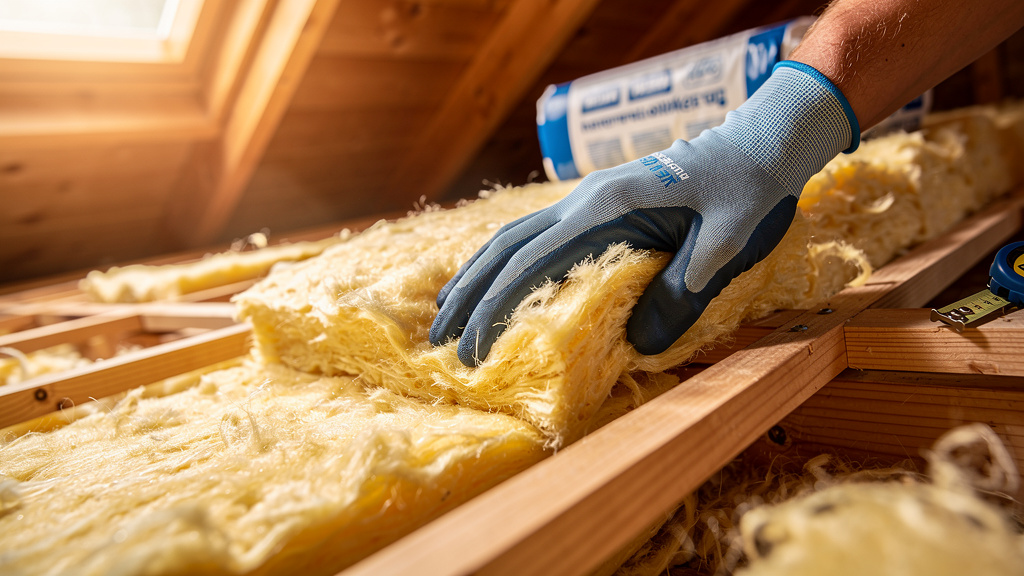
Fiberglass batts come in pre-cut widths for standard joist spacing. They are easy to handle but leave gaps around pipes and wires. The Federal Trade Commission requires manufacturers to label R-values on packaging.
- Pros: widely available, DIY-friendly
- Cons: gaps reduce performance, lower coverage in irregular spaces
Spray Foam Insulation
Spray foam creates an air barrier and insulation in one step. Open-cell foam is lighter and cheaper. Closed-cell foam delivers R-6.0 to R-7.0 per inch and resists moisture. The Department of Energy explains that spray foam can yield a higher R-value than batt insulation for the same thickness.
- Pros: highest R-value per inch, air seals automatically
- Cons: highest cost, requires professional installation
DIY vs. Professional Installation in NJ
Some homeowners consider DIY to save money. Others hire pros for speed and safety.
DIY Attic Insulation Costs
Renting a blower machine costs $100 to $200 per day. Material runs $0.40 to $1.20 per square foot. A 1,000-square-foot DIY blown-in job totals $500 to $1,400. You’ll need protective gear, lighting, and a helper.
DIY works for simple attics with good access and no air-sealing needs. Skip DIY if your attic has knob-and-tube wiring, active leaks, or mold. These conditions require professional handling.
Professional Installation Costs
Pros charge $1.50 to $7.00 per square foot installed. They handle air sealing, baffles, and code compliance. Most offer warranties of 10 years or more. Licensed contractors also carry insurance that protects your home.
For most Monmouth County homeowners, professional installation pays off. The work finishes in one day. You get documentation for rebates and resale value. Our home repair services in West Long Branch include insulation prep work and air sealing.
How Much Energy Can You Save?
Proper attic insulation cuts heat loss in winter and heat gain in summer. The U.S. Environmental Protection Agency estimates homeowners save an average of 15% on heating and cooling costs through air sealing and insulating key areas of the home. These savings come from air sealing and insulating attics, crawl spaces, and basement rim joists. In New Jersey’s cold winters and humid summers, savings often hit 20%.
For a home spending $2,400 yearly on heating and cooling, that’s $360 to $480 back in your pocket. Over 10 years, savings total $3,600 to $4,800. That covers most insulation projects.
Insulation also reduces strain on HVAC equipment. Furnaces and air conditioners run less. They last longer. You avoid early replacement costs.
What Are NJ Building Codes for Attic Insulation?
New Jersey follows the 2021 International Energy Conservation Code. Monmouth County requires a minimum R-49 for attics in new construction and major renovations. Existing homes should target R-60 for optimal performance.
NJ is in DOE Climate Zone 4. The Department of Energy recommends R-60 for uninsulated attics in Zone 4. Homes with 3 to 4 inches of existing insulation should add R-49 on top.
A home energy assessment identifies your current R-value. Some Monmouth County utilities offer free or discounted audits. Check with your energy provider.
Ready to Upgrade Your Attic Insulation?
Properly insulated attics cut energy bills by 15% or more. Call (732) 400-4667 for a free insulation assessment — we serve West Long Branch and all of Monmouth County.
Frequently Asked Questions:
1. How much does attic insulation cost per square foot in NJ?
Attic insulation costs $1.50 to $7.00 per square foot in New Jersey. Blown-in fiberglass is the cheapest at $1.50 to $2.50. Closed-cell spray foam is the most expensive at $5.00 to $7.00.
2. What R-value do I need for my Monmouth County attic?
You need R-49 to R-60. New Jersey is DOE Climate Zone 4. The Department of Energy recommends R-60 for uninsulated attics. They recommend R-49 when adding over 3 to 4 inches of existing insulation.
3. Is spray foam worth the extra cost?
Spray foam is worth it if you need maximum R-value in a limited space or live near the coast. It air seals and insulates in one step. For standard attics, blown-in delivers better value per dollar.
4. Can I get rebates for attic insulation in NJ?
Yes. The NJ Clean Energy Program offers rebates up to $5,000 through Home Performance with Energy Star. A home energy audit is required to qualify. You must use a certified contractor and complete a pre- and post-work assessment.