How to Fix a Window Screen Yourself vs. Hiring a Handyman in NJ

How to Choose the Right Basement Waterproofing Method for Your NJ Home: Interior vs. Exterior Solutions
May 11, 2026
The Ultimate Memorial Day Home Prep Checklist for West Long Branch Homeowners
May 25, 2026
Key Takeaways
- A standard fiberglass window screen replacement costs $15–$30 in materials if you do it yourself, or $50–$150 per screen when you hire a handyman in Monmouth County.
- Most window screen repairs take 20–45 minutes for a DIYer with basic tools, including removing the old spline, cutting new mesh, and reinstalling the frame.
- Fiberglass screens last 7–10 years, while aluminum screens can last 15+ years but dent more easily and cost roughly 30% more upfront.
- Damaged screens reduce airflow and can increase cooling costs by forcing your AC to work harder during New Jersey summers. According to the U.S. Environmental Protection Agency, Americans spend about 90% of their time indoors, making good ventilation — including functional window screens — a health and comfort priority.
- If the frame itself is bent, cracked, or corroded, replacement is usually smarter than repair — a pro can match the frame color and size to your existing windows.
You can fix a torn window screen yourself in about 30 minutes with a $10 spline roller and a $15 roll of screen mesh. Most homeowners in West Long Branch and Monmouth County handle small tears and fraying on their own. But when the frame is damaged, the screen is custom-sized, or you have a second-story window, calling a handyman in West Long Branch saves time and keeps you off a ladder.
What You’ll Need for a DIY Window Screen Repair
A window screen repair kit from any hardware store in Monmouth County has everything you need. The job requires no power tools and very little experience.
Tools and Materials
| Item | Average Cost | Where to Buy |
|---|---|---|
| Screen mesh (fiberglass, 36\” x 84\” roll) | $12–$18 | Home Depot, Lowe’s, local hardware stores |
| Spline roller | $5–$10 | Same as above |
| Replacement spline (rubber cord) | $3–$6 | Same as above |
| Utility knife or scissors | Already owned | — |
| Flat-head screwdriver | Already owned | — |
| Masking tape | $3–$5 | Same as above |
Total DIY cost: $23–$39 for a single screen repair, with leftover materials for future fixes.
Fiberglass mesh is the standard choice for most New Jersey homes. It’s flexible, easy to work with, and resists rust. Aluminum mesh costs more but holds up longer — about 15 years on average — though it creases and tears if something hits it. For homes near the coast in Monmouth County, fiberglass is usually the better pick because salt air corrodes aluminum faster. Keeping your window screens in good shape is part of basic home upkeep that protects your investment.
Step-by-Step: How to Replace a Window Screen
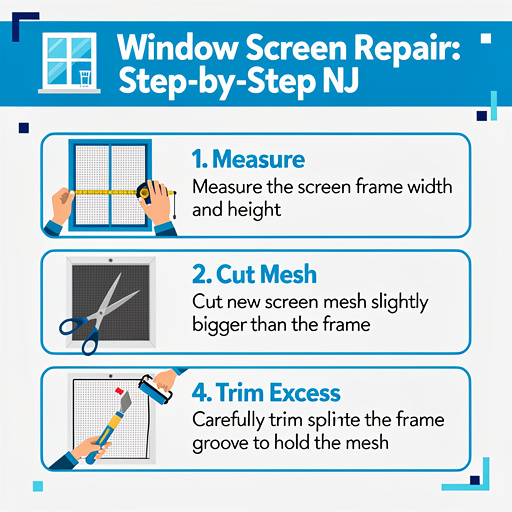
Step 1: Remove the Screen Frame
Pop the screen out of the window. Most frames have spring-loaded edges or pull tabs. Lay the frame flat on a clean surface. If the old mesh is still in place, use a flat-head screwdriver to pry up the old spline, the rubber cord that holds the mesh in the groove.
Step 2: Measure and Cut the New Mesh
Roll the new screen mesh over the frame, leaving about 1 inch of overhang on all sides. Cut it with scissors or a utility knife. Don’t stretch it yet — you’ll do that in the next step.
Step 3: Install the New Spline
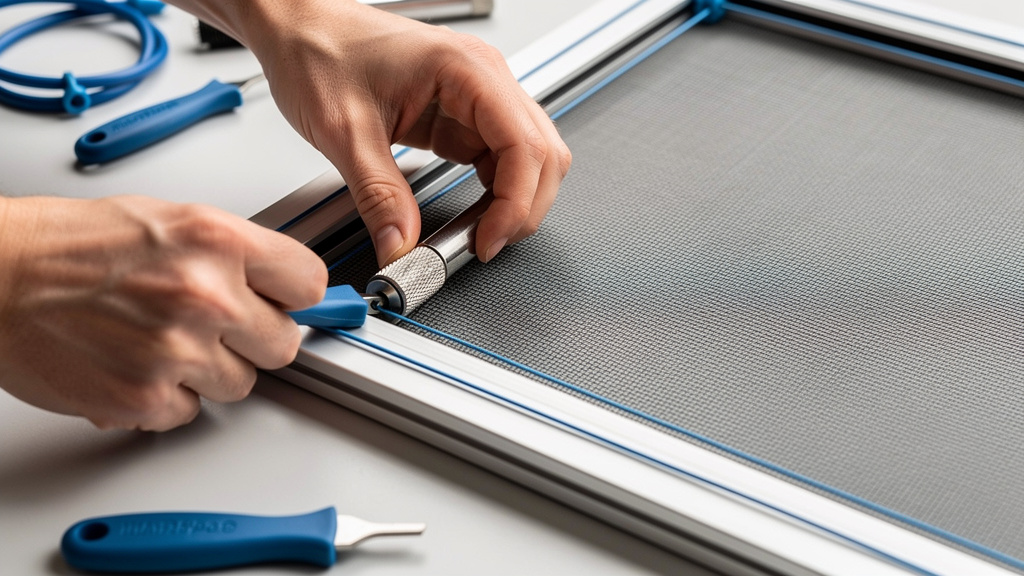
Starting at one corner, press the spline into the groove using the roller tool. Work your way around the frame, keeping the mesh taut but not warped. The spline locks the mesh in place and creates the tension that keeps the screen flat.
Step 4: Trim the Excess
Once the spline is fully seated, trim the overhanging mesh with a utility knife. Run the blade along the outside edge of the groove for a clean cut.
Step 5: Reinstall the Screen
Pop the frame back into the window. Test the fit. If the mesh is too loose, the spline didn’t seat deeply enough — remove it and try again with slightly more tension.
The whole process takes 20–45 minutes for a first-timer. After you’ve done one, the next screen takes about 15 minutes.
Common Mistakes That Waste Time and Money
Cutting the mesh too short. Always leave at least 1 inch of overhang. If you cut it flush with the frame, you won’t have enough material to seat the spline properly.
Using the wrong spline size. Spline comes in diameters from .125″ to .185″. Take a piece of the old spline to the store and match it. The wrong size won’t hold the mesh tight.
Forcing a bent frame back into shape. Aluminum frames bend easily, and trying to straighten them usually makes them worse. A wavy frame won’t seal against the window, letting bugs in.
Skipping the spline roller. Some DIYers try to push the spline in by hand or with a screwdriver. This takes three times as long and often tears the mesh. The $5 roller is worth it.
When a Damaged Screen Needs a Pro Instead
The Frame Is Bent or Corroded
A damaged frame is the most common reason to call a handyman. If the aluminum frame has a kink, crack, or corrosion from coastal air, replacement is usually the only fix. Our carpentry team in West Long Branch carries frame stock in standard colors — white, bronze, and mill finish — and can match your existing windows.
It’s a Custom or Oversized Screen
Large picture windows, patio doors, and arched windows use oversized screens that don’t fit standard kits. A handyman can build a custom frame on-site or order one from a local supplier in Monmouth County.
You’re Working on a Second Story
Ladder work is where DIY injuries happen. According to the Consumer Product Safety Commission, thousands of ladder-related injuries occur each year during home maintenance tasks. For second-story windows or balcony doors, a pro with the right equipment is safer and faster.
You Have Multiple Screens to Fix
If you’re preparing a West Long Branch home for sale or tackling spring maintenance, you might have 8–12 screens to repair. A handyman can knock out the whole job in 2–3 hours, saving you a full weekend.
DIY vs. Hiring a Handyman: Cost Breakdown
| Repair Type | DIY Cost | Handyman Cost | Time (DIY) | Time (Pro) |
|---|---|---|---|---|
| Single screen, mesh only | $23–$39 | $50–$75 | 30 min | 15 min |
| Single screen, frame + mesh | $40–$60 | $85–$150 | 45 min | 20 min |
| Multiple screens (5–10) | $100–$200 | $250–$500 | 4–6 hours | 2–3 hours |
| Custom or oversized screen | Not practical | $150–$300 | N/A | 30–60 min |
| Second-story window | Not recommended | $75–$125 | N/A | 20 min |
The decision usually comes down to time versus money. If you have one screen with a small tear and a free Saturday morning, DIY makes sense. If you have a bent frame, a custom size, or a whole house full of worn screens, a handyman gets it done faster. We also handle related jobs like fixing drafty doors and door installation if you’re tackling multiple projects.
In Monmouth County, handyman rates for screen repair typically fall between $50 and $150 per screen, depending on size and frame condition. With median home values in Monmouth County exceeding $500,000, maintaining details like window screens protects curb appeal and resale value. For homes near the shore, salt corrosion often means frames need replacement rather than just mesh — a factor that pushes costs toward the higher end.
Need a Pro to Handle It in West Long Branch?
Skip the hassle. Call (732) 400-4667 for a free quote — we handle screen repairs, replacements, and full window service across Monmouth County.
Frequently Asked Questions
1. How long does a window screen repair take?
A DIY screen mesh replacement takes 20–45 minutes for your first one, and about 15 minutes once you get the technique down. A handyman can usually complete a standard screen repair in 10–15 minutes.
2. What’s the difference between fiberglass and aluminum screen mesh?
Fiberglass is more flexible, easier to work with, and costs less — about $12–$18 per roll. Aluminum is more durable and lasts longer but dents easily and costs roughly 30% more. For coastal areas like Monmouth County, fiberglass resists salt corrosion better.
3. Can I replace just the mesh and keep my old frame?
Yes, if the frame is straight and the corners are tight. Most screen repairs are mesh-only replacements. But if the frame is bent, corroded, or the corners are loose, the frame needs replacement, too.
4. Do I need a permit to replace window screens in West Long Branch?
No. Window screen replacement is considered routine maintenance and does not require a permit in Monmouth County. If you’re replacing the entire window unit, check with the West Long Branch building department for permit requirements.